Antique 18th c. Moustiers Inkwell
Antique 18th c. Moustiers Inkwell
Couldn't load pickup availability
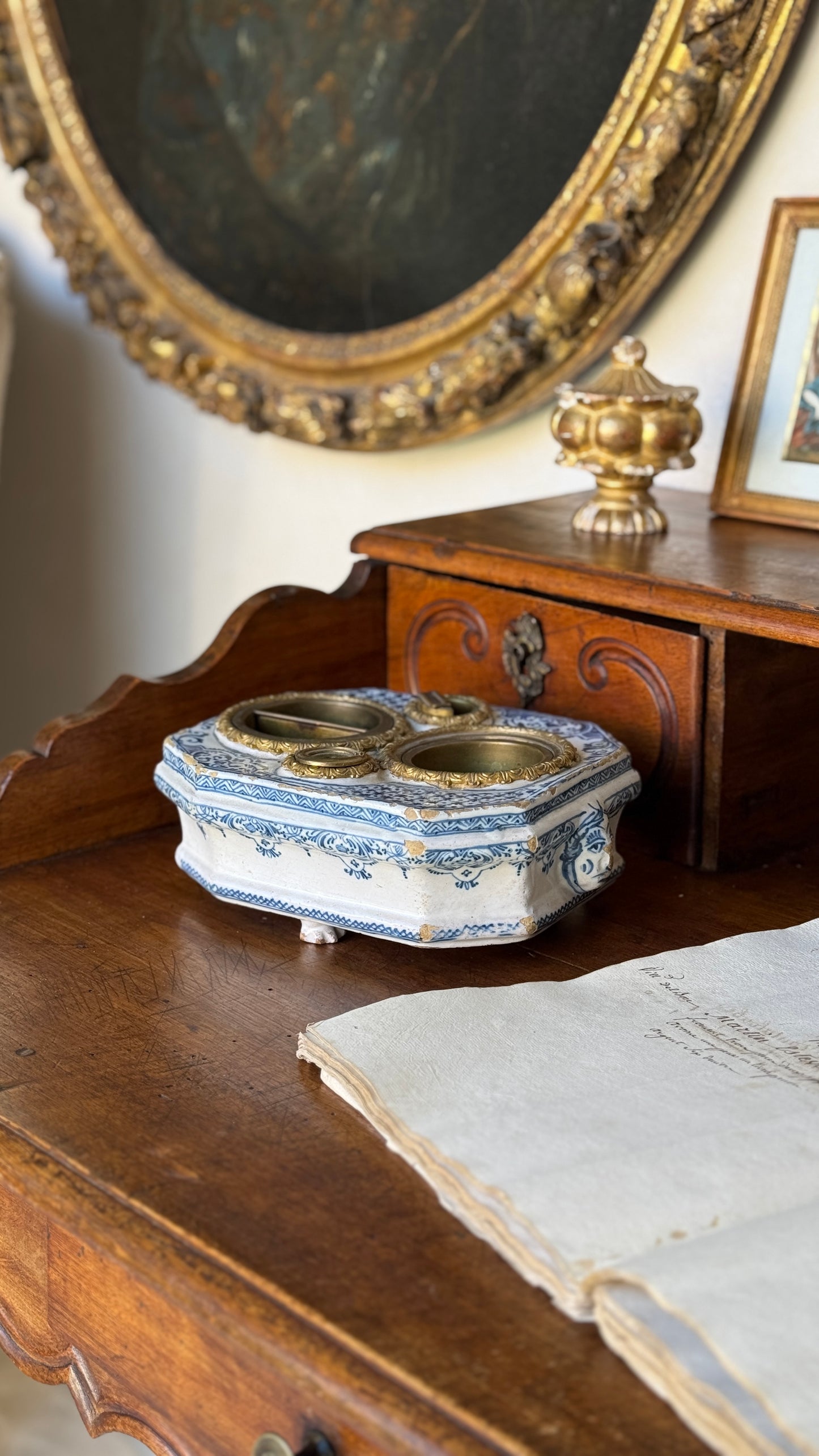
Antique Moustiers Inkwell
- antique circa 1790
- made in Moustiers, France
- found in the South of France
- hand painted classic motifs of the Moustiers region in cobalt blue on white tin glazed earthenware known as faience
- Approximately 3.5" high x 8.5" wide x 6.5" deep
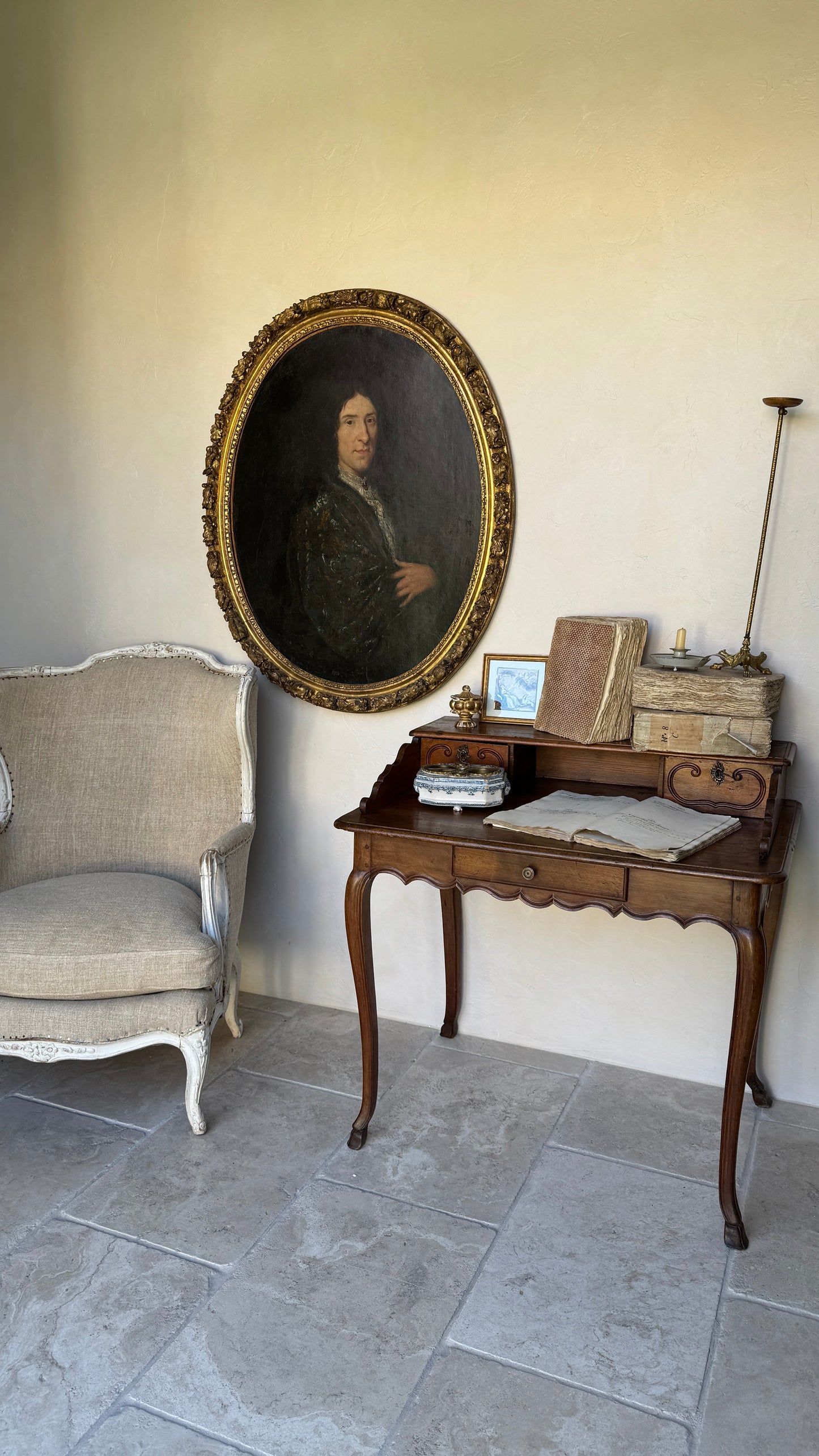
A charming example of French faience craftsmanship, this antique encrier features delicate blue and white hand-painted decoration accented by ornate brass mounts and whimsical mascaron detailing. Originally used as a writing stand to hold ink pots and quills, pieces like this brought both beauty and refinement to the desks of 18th and 19th century European interiors. Rich with old-world character and history, it makes a stunning decorative object for a desk, bibliothèque, or cabinet display.
Moustiers Ceramics
Moustiers ceramics, or Moustiers faience, originated in the small Provençal village of Moustiers-Sainte-Marie and became one of the most celebrated forms of French tin-glazed earthenware during the 17th and 18th centuries.
Known for their refined hand-painted decoration and luminous white glaze, Moustiers pieces were often inspired by Italian maiolica, Chinese porcelain, and the elegance of French Rococo design. Early examples frequently featured delicate blue floral motifs, while later works became more elaborate with mythological scenes, grotesques, chinoiserie figures, birds, and whimsical pastoral imagery.
What makes Moustiers faience especially significant is the artistry and individuality of each piece. Unlike factory-made ceramics, these wares were hand-painted by skilled artisans, making no two exactly alike. The region became renowned for its exceptional craftsmanship and helped establish Provence as an important center of decorative arts in France.
Today, antique Moustiers ceramics are highly prized for their romantic Old World character, painterly quality, and connection to the refined decorative tastes of the Louis XIV, Louis XV, and Louis XVI periods.