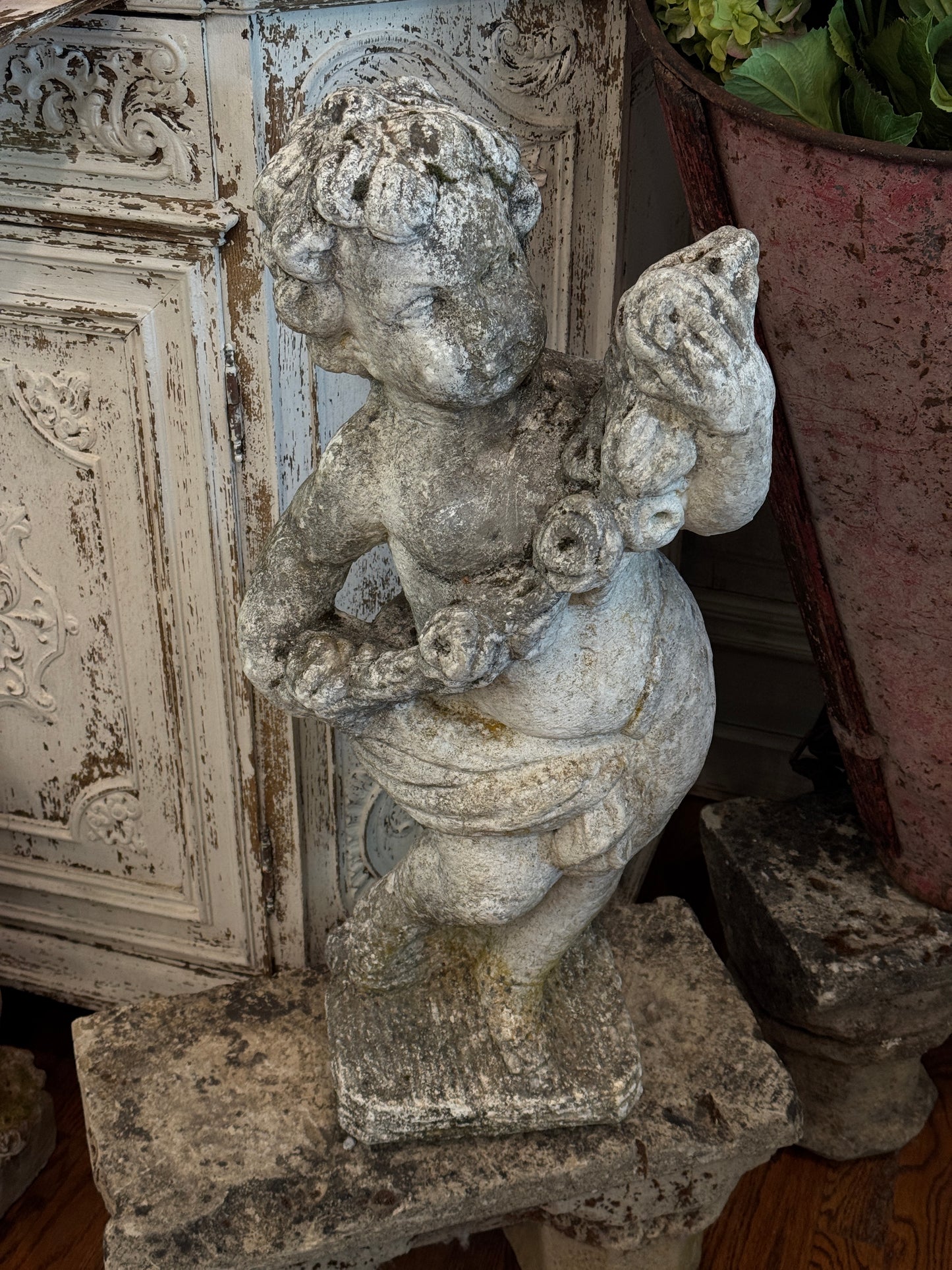
Antique 19th c. French Spring Putti Garden Statue
Antique 19th c. French Spring Putti Garden Statue
Low stock: 1 left
Couldn't load pickup availability
Important Shipping Information
Important Shipping Information
Please allow up to 5 business days (Monday–Friday, excluding holidays) for your order to be carefully processed, packed, and prepared for shipment.
Return Policy
Return Policy
We want you to love your purchase. If for any reason you are not completely satisfied with an eligible item, we are happy to accept returns in accordance with our Return & Refund policy. You can find the full policy here.
Final Sale Items:
- Antique and vintage items
- Furniture and oversized freight shipments
- Clearance and sale merchandise
- Special orders or custom orders
- Gift cards
Antique Garden Statue
- antique circa 1890
- found in Paris, France
- aged garden stone, possibly concrete
- Approximately 27.5" high x 9" wide x 8.5" deep
A beautifully weathered garden cherub, rich with time-earned patina and classical charm. Made of stone and softened by decades of exposure, this piece captures the romantic spirit of European garden design. The gentle expression and fruit-filled motif evoke abundance and old-world elegance—perfect for styling indoors or anchoring a garden vignette.
Historical Context
While the Greeks initially used the Horae (goddesses) to represent the seasons, Romans popularized the use of putti (winged, often nude infants) in these roles. These figures appear on Roman sarcophagi, serving as allegories for agricultural cycles, and became highly popular in neoclassical and garden art during the Renaissance and later periods.
- Spring: Often portrayed with wreaths of flowers, bouquets, or leafy garments symbolizing renewal, youth, and growth.
- Summer: Shown with wheat sheaves, laurel branches, or cornucopias, often wearing a laurel wreath to represent abundance, harvest, and warmth.
- Autumn: Characterized by bunches of grapes, vines, or baskets of fruit, symbolizing the harvest, maturity, and wine making.
- Winter: Represented as an older or heavily cloaked child, sometimes with bare branches, symbolizing cold, stillness, and rest.