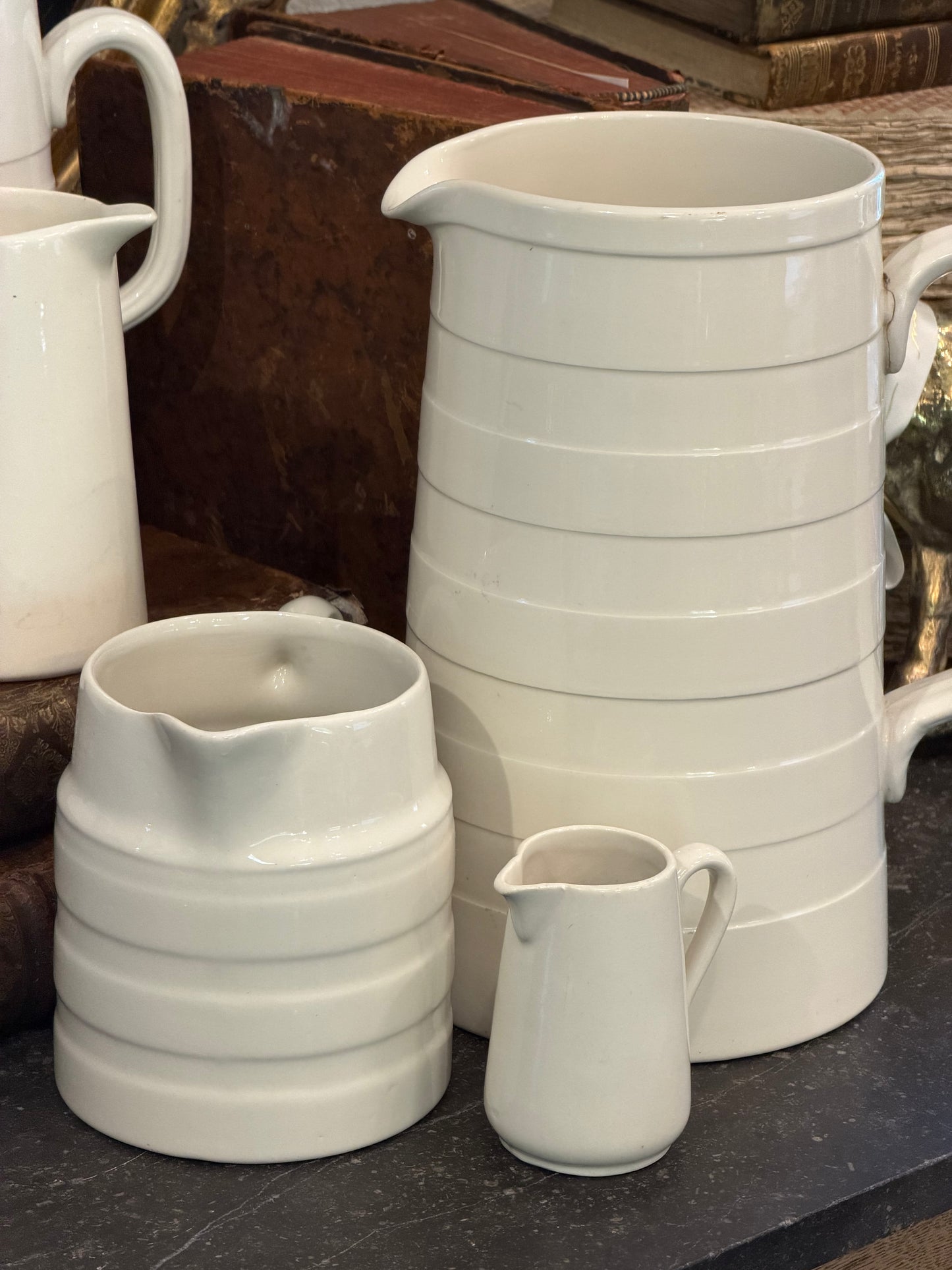
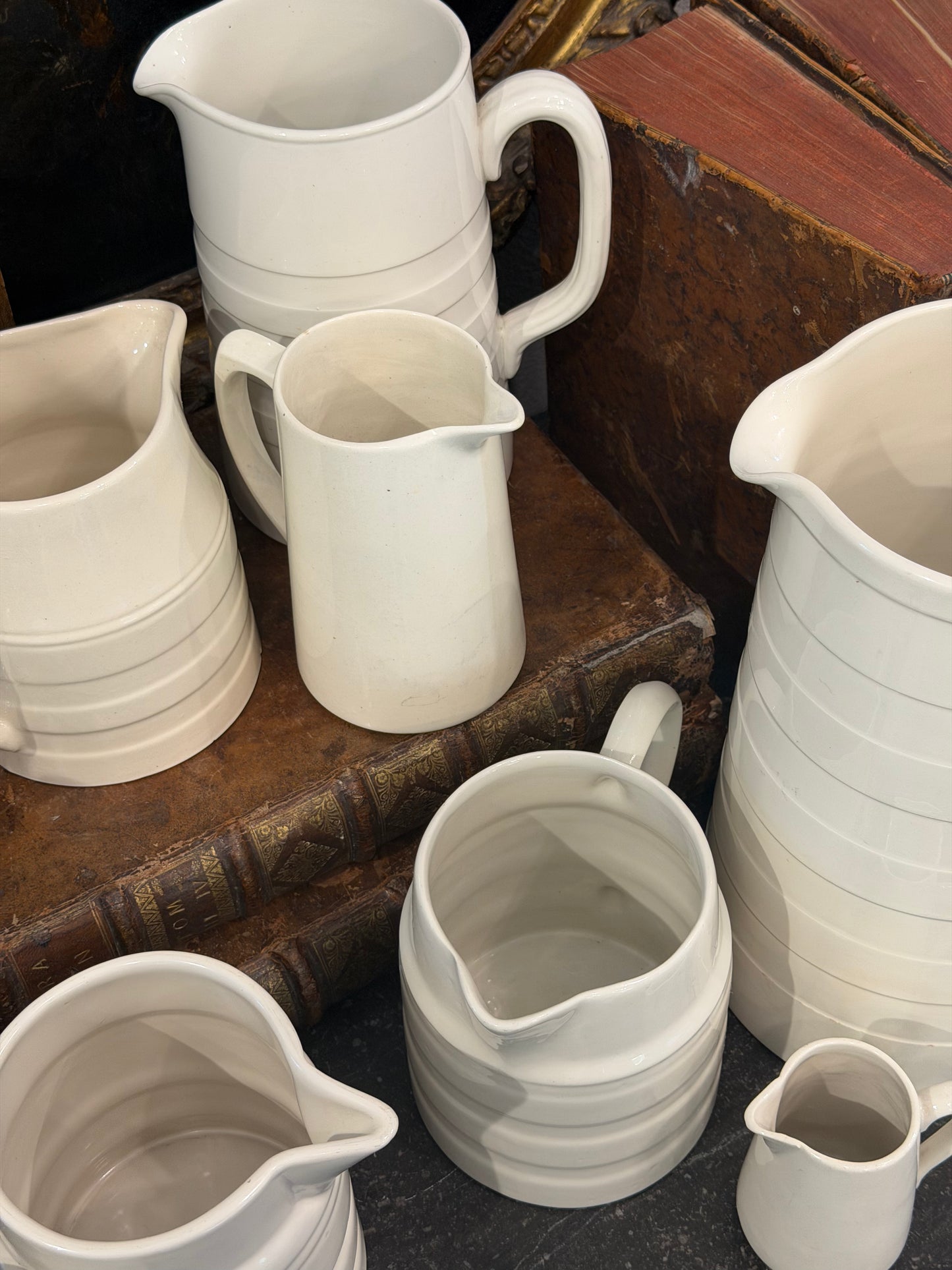
Antique 20th c. English Edwardian Ironstone Banded Dairy Jug - Extra Large
Antique 20th c. English Edwardian Ironstone Banded Dairy Jug - Extra Large
Low stock: 1 left
Couldn't load pickup availability
Important Shipping Information
Important Shipping Information
Please allow up to 5 business days (Monday–Friday, excluding holidays) for your order to be carefully processed, packed, and prepared for shipment.
Return Policy
Return Policy
We want you to love your purchase. If for any reason you are not completely satisfied with an eligible item, we are happy to accept returns in accordance with our Return & Refund policy. You can find the full policy here.
Final Sale Items:
- Antique and vintage items
- Furniture and oversized freight shipments
- Clearance and sale merchandise
- Special orders or custom orders
- Gift cards
Antique English Edwardian Banded Dairy Jug
- antique circa 1910
- found in the English countryside
- ironstone
- Approximately 11" high x 6.75" base diameter
A classic English Edwardian dairy jug in softly glazed ironstone, featuring traditional banded detailing and a beautifully balanced form. Originally used in early 20th century kitchens for milk or water service, this piece reflects the quiet simplicity and durability of English farmhouse life. These jugs were intentionally plain, durable, and utilitarian—a hallmark of English kitchenware of the time. Today, it brings that same understated charm to the table or shelf—perfect for everyday use or filled with fresh, gathered blooms. They are the definition of that quiet European kitchen look we strive to curate at Maison Blue.
About ironstone
Ironstone is a type of pottery or stoneware that was first produced in the early 19th century. It is known for its strength, durability, and ability to imitate the look of more expensive porcelain. Ironstone gets its name from the iron-like properties it exhibits when fired.
Ironstone is made from a mixture of clay, flint, and ironstone (a sedimentary rock rich in iron oxide), which gives it its characteristic dense and heavy composition. The clay and other materials are combined and formed into the desired shape, such as plates, bowls, pitchers, or teapots. The pieces are then fired at high temperatures, resulting in a hard, vitrified surface.
One of the distinguishing features of ironstone is its white or off-white color, although it can also be found in other colors such as blue or brown. The white ironstone became particularly popular because it resembled the more expensive porcelain of the time.
Ironstone was initially developed as a cheaper alternative to porcelain, which was highly sought after but expensive. Its affordability, durability, and resistance to chipping made it a popular choice for everyday tableware, kitchenware, and other household items.