Antique 19th c. Belgian Floral Architectural Relief Panel
Antique 19th c. Belgian Floral Architectural Relief Panel
Low stock: 1 left
Couldn't load pickup availability
Important Shipping Information
Important Shipping Information
Please allow up to 5 business days (Monday–Friday, excluding holidays) for your order to be carefully processed, packed, and prepared for shipment.
Return Policy
Return Policy
We want you to love your purchase. If for any reason you are not completely satisfied with an eligible item, we are happy to accept returns in accordance with our Return & Refund policy. You can find the full policy here.
Final Sale Items:
- Antique and vintage items
- Furniture and oversized freight shipments
- Clearance and sale merchandise
- Special orders or custom orders
- Gift cards
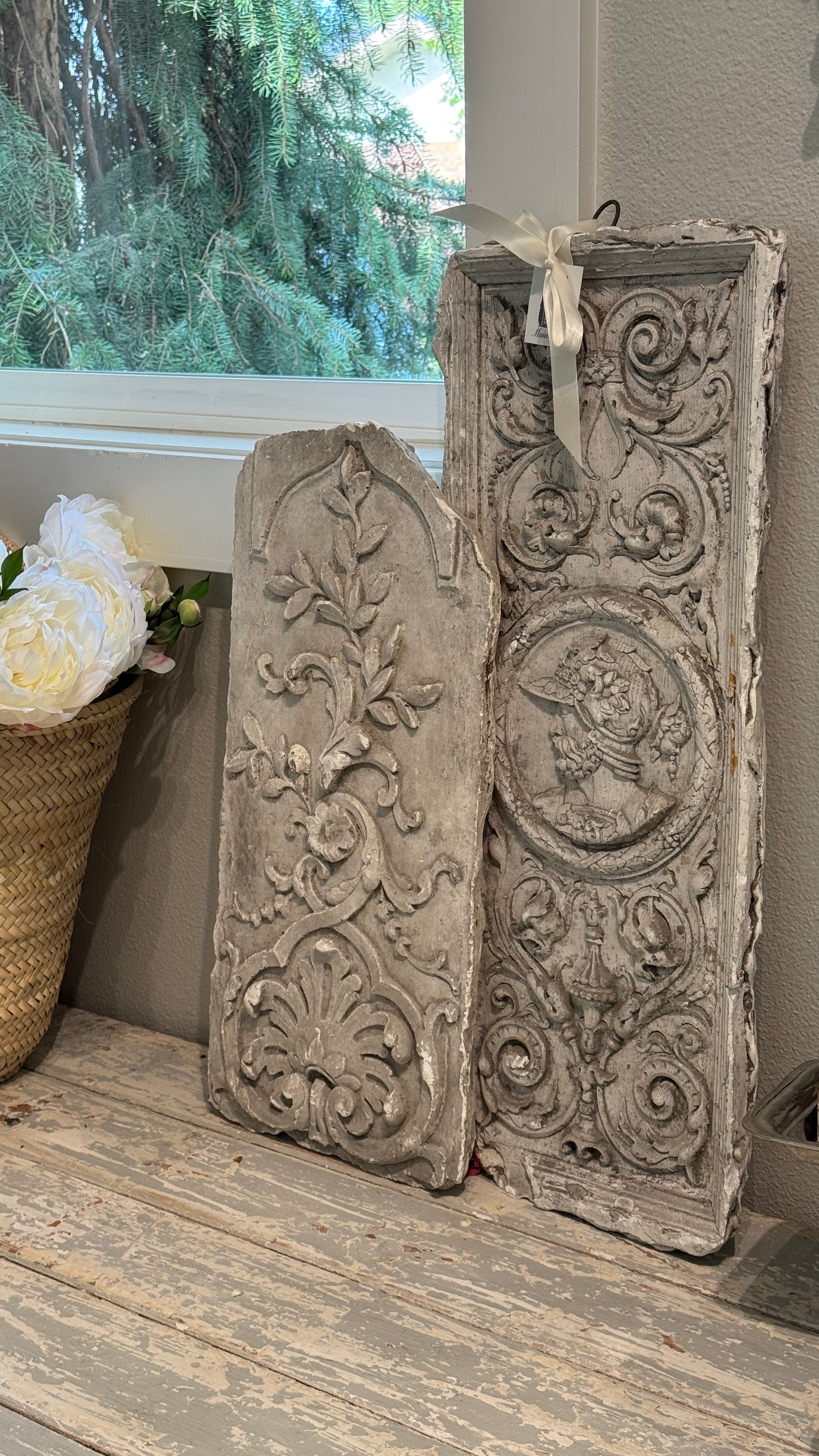
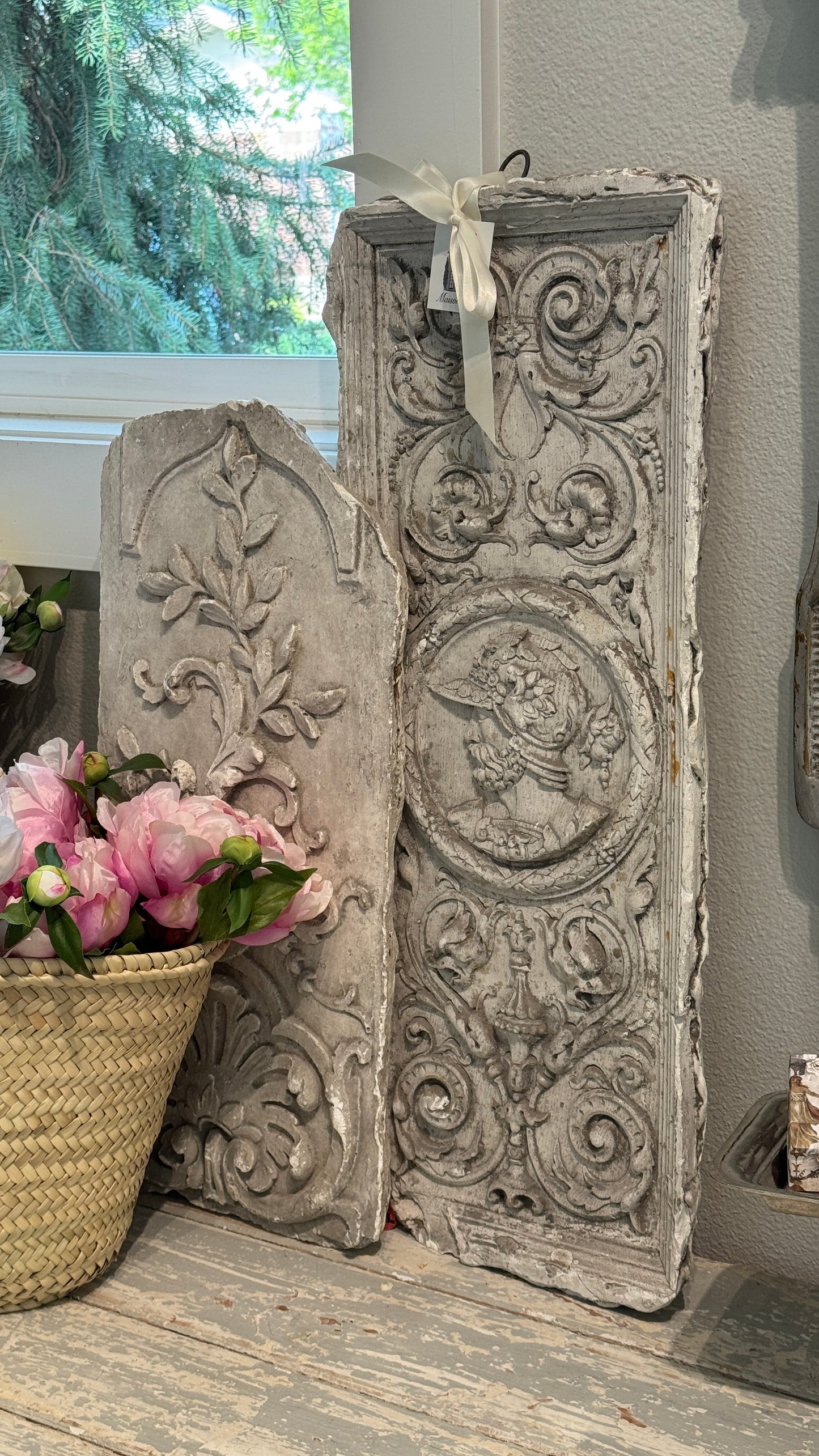
Antique Architectural Relief Panel
- antique circa 1880
- found in Paris, France
- originally from Belgium
- likely originally used: inset into wood paneling or boiserie; mounted as part of a decorative wall scheme; used in a library, salon, or stair hall; incorporated into furniture or cabinetry; or installed as an overdoor/supraporte style decorative element.
- made of plaster
- Approximately: 20.75" high x 9.5" wide
- sold individually
An antique Belgian plaster architectural relief panel featuring elegantly scrolling floral and foliate ornament in the Renaissance Revival taste. Created in the late 19th to early 20th century, the panel reflects the romantic historicism that flourished throughout Belgium and France during the Belle Époque era, when decorative arts workshops produced richly detailed architectural casts inspired by earlier European design traditions.
Unlike the more formal classical symmetry often seen in Italian Renaissance-inspired panels, this example displays a softer and more organic composition with flowing botanical motifs, stylized acanthus ornament, and a trefoil-inspired arched surround. These elements draw influence from both Flemish decorative arts and French Renaissance Revival interiors popular during the late 1800s.
Its beautifully weathered chalky surface, molded relief construction, and intentionally fragmentary edges are characteristic of antique Belgian architectural plasterwork of the period. Panels such as this were often created as decorative architectural elements intended for inset wall paneling, boiserie, overmantels, or richly layered European interiors designed to emulate the grandeur of historic estates and salons.
Today, pieces like this are especially sought after for their sculptural presence and romantic old-world character — equally striking layered into collected interiors, libraries, and European-inspired spaces alike.